
Key Metrics for Predictive Feature Usage Analytics
Measure adoption, repeat use, model performance, and business impact to turn feature usage into actionable predictions.

Updates, guides, and insights from the NanoGPT team
Showing
Measure adoption, repeat use, model performance, and business impact to turn feature usage into actionable predictions.

Use Kubeflow on Kubernetes to build reproducible ML pipelines, serve models with KServe, autoscale, and lower costs.

Practical checklist to design, log, secure, and monitor AI image audit trails for compliance, integrity, and privacy.

Clamp gradient norms to prevent exploding gradients in RNNs — practical clipping-by-norm advice, implementation tips, and tuning guidance.

ML forecasting and optimization cut energy use in data centers, grids, buildings, and industry while noting data and deployment limits.

Adapting labeled models to unlabeled target data fixes domain shift using alignment, adversarial training, and pseudo-labels.

Compress ONNX models to cut size and latency with quantization, pruning, and mixed-precision—practical tools and deployment tips.

Compare classical ML, graph-based GeoAI, and LLM platforms for traffic forecasting—accuracy, scalability, and operational trade-offs.
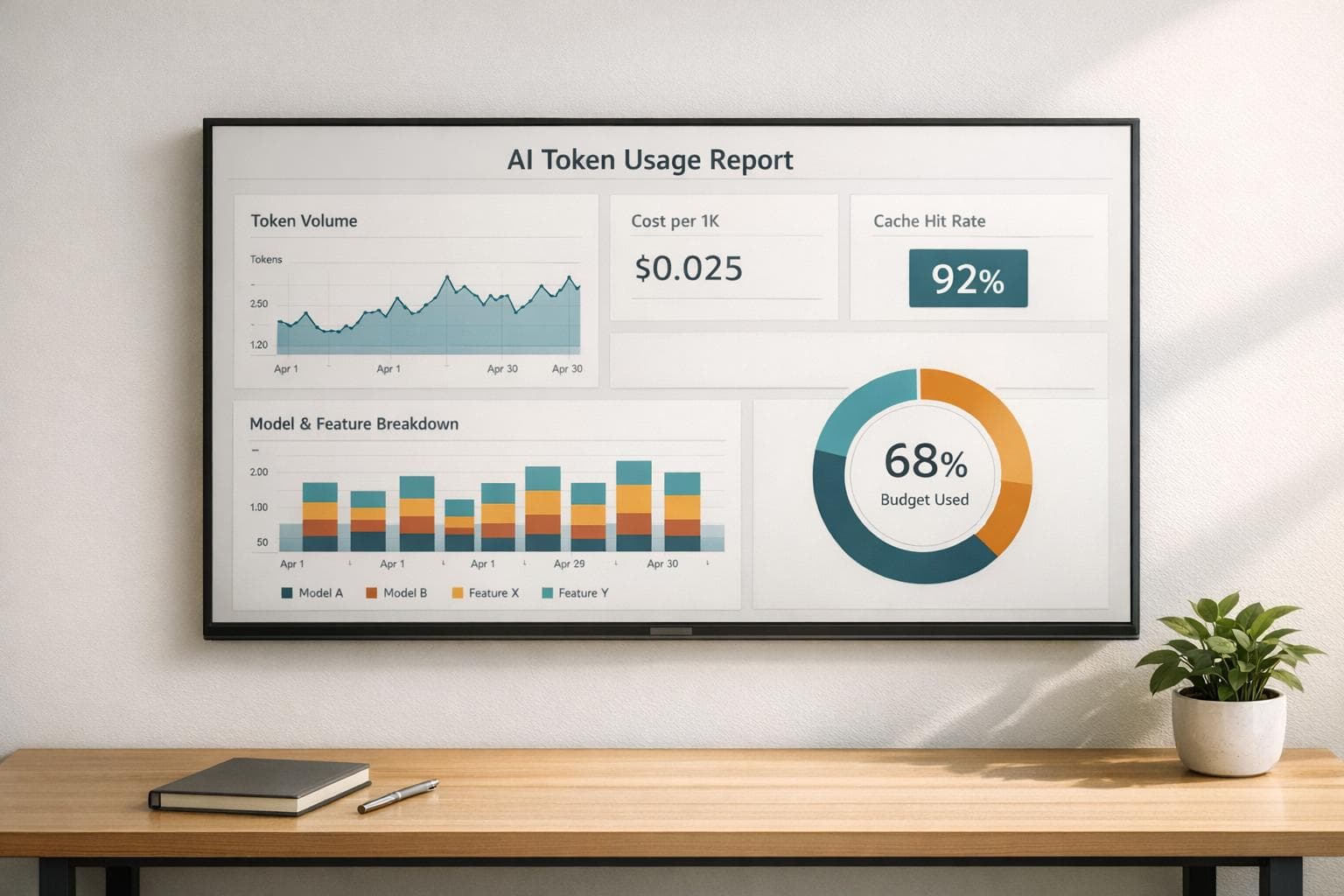
Build clear AI token usage reports with token volume, cost per 1K, model/feature breakdowns, cache hit rates, and budgeting.

Run AI models locally for privacy, lower latency, and cloud-free performance — hardware, quantization, GGUF formats, and tools.