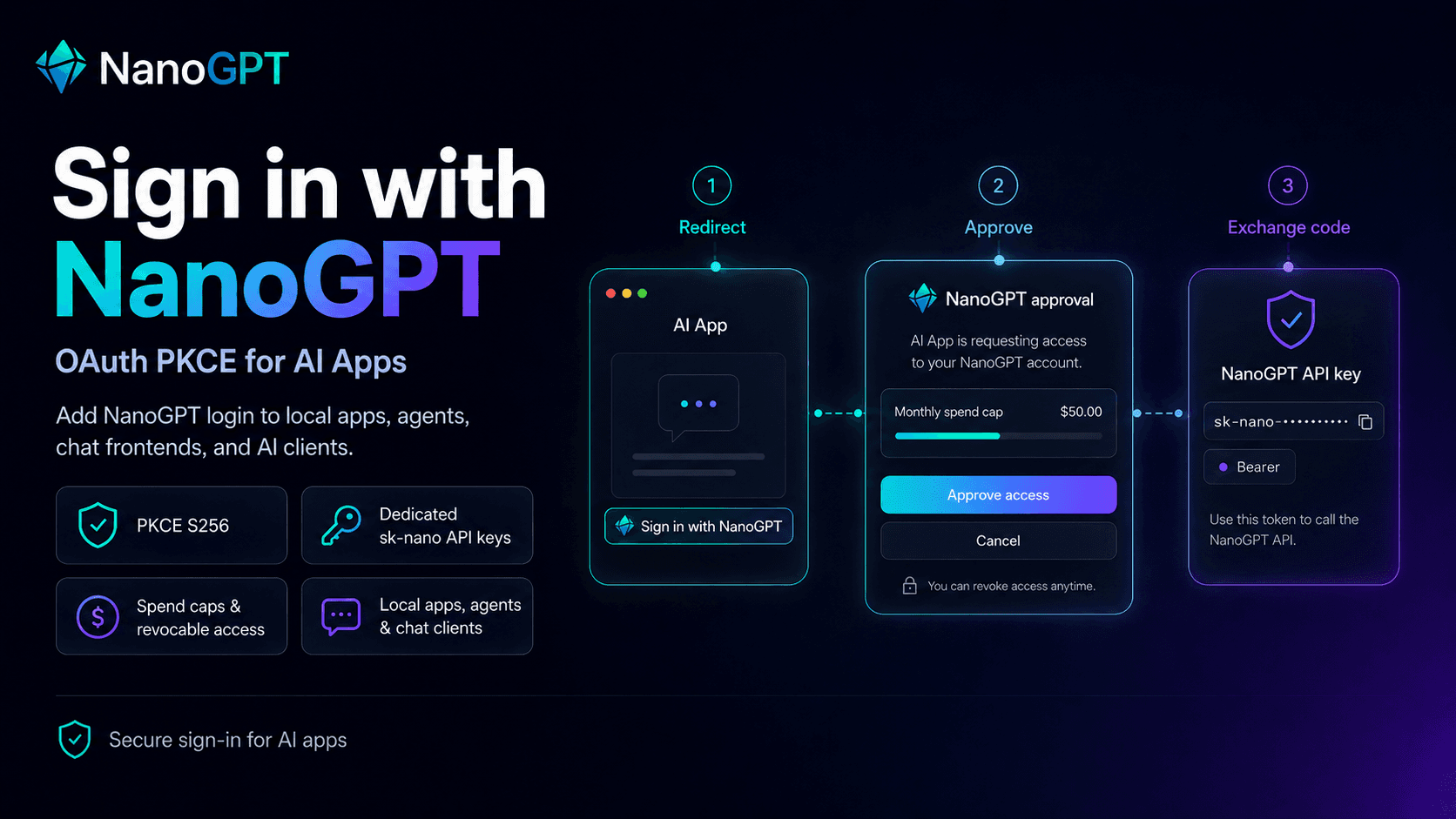
Sign in with Bitcoin.com AI: OAuth PKCE for AI Apps
Developers can now add Sign in with Bitcoin.com AI to local apps, agents, chat frontends, and OpenAI-compatible clients.

Updates, guides, and insights from the NanoGPT team
Showing
Developers can now add Sign in with Bitcoin.com AI to local apps, agents, chat frontends, and OpenAI-compatible clients.
Bitcoin.com AI Private Mode encrypts supported TEE chat requests in your browser or local proxy before Bitcoin.com AI receives them, with receipts you can verify yourself.

A complete roundup of what Bitcoin.com AI shipped in May 2026, including Private Mode, PII redaction, Batch API, Data API, image templates, model comparisons, new media models, payment options, and reliability improvements.
Bitcoin.com AI Private Mode encrypts supported TEE model requests in the browser, shows verification receipts after responses, and gives users a way to independently check attestation evidence.

Shrink inputs, prevent leakage, align pipelines, and trim prompts to cut compute, storage, and token costs across ML and generative AI workflows.
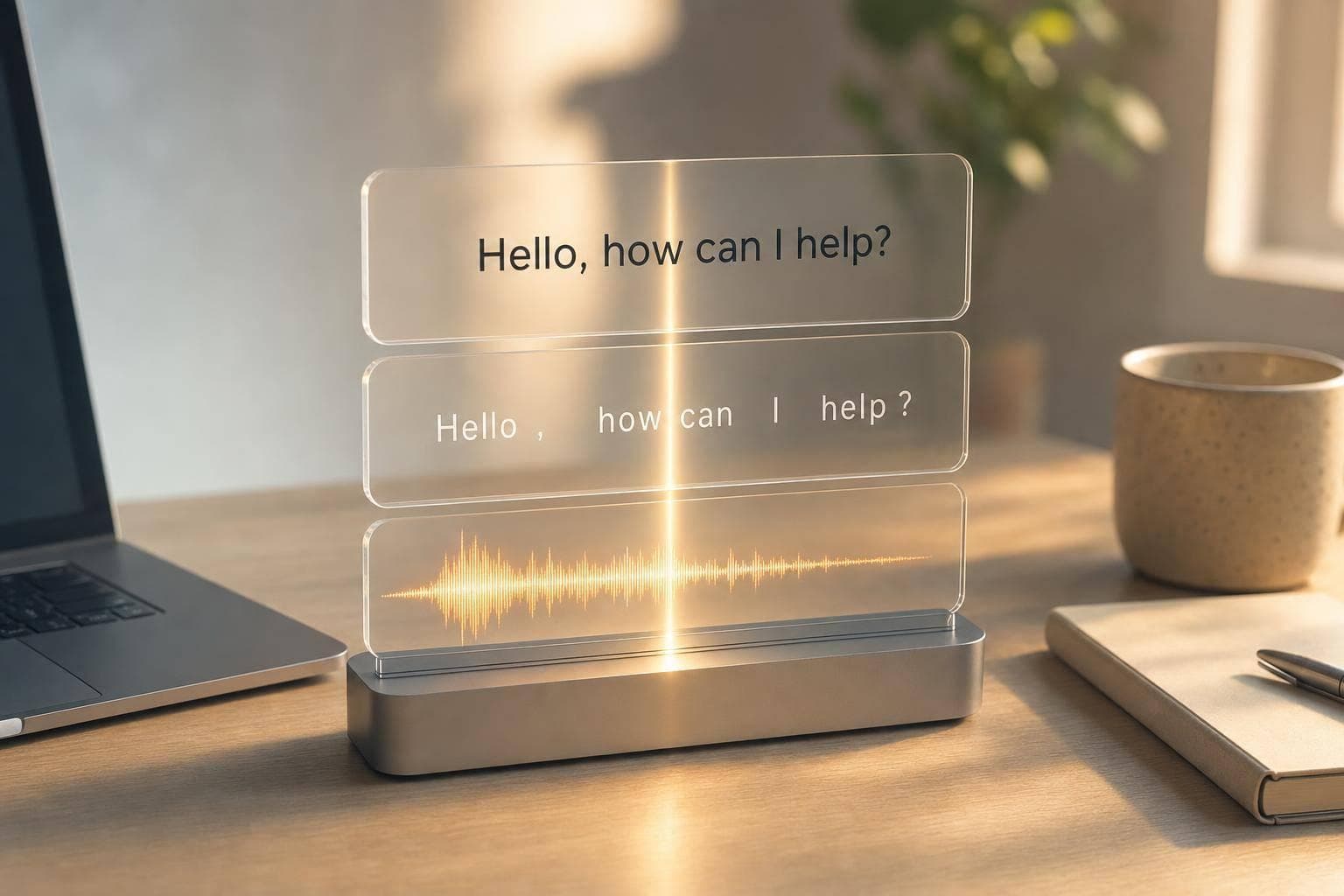
Stream early and normalize text—TTS choice and deployment determine whether voice AI feels instant or clunky.

Protect uptime first: use small models, caching, batch/live separation, tool offload, metrics-based routing and failover.
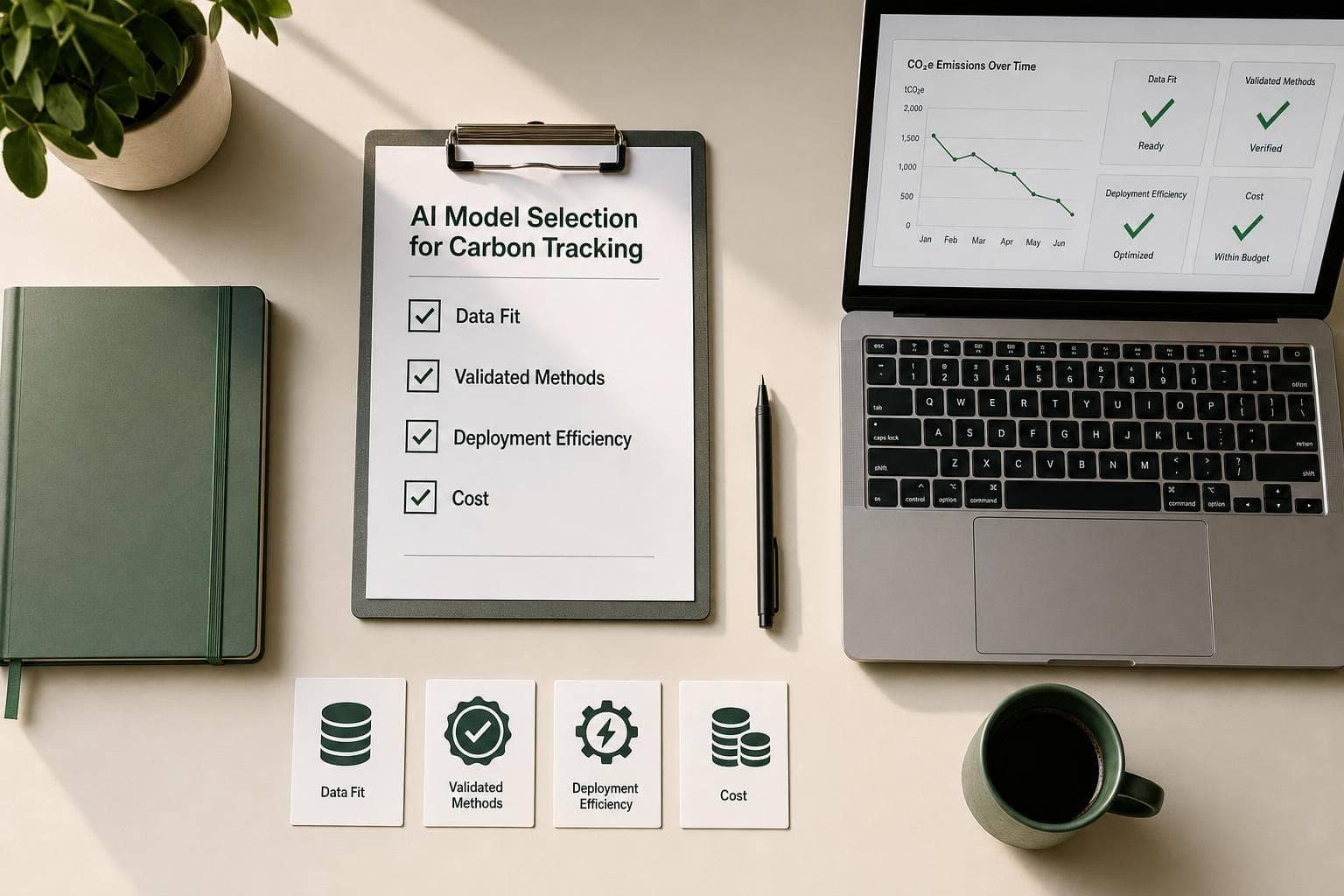
Step-by-step checklist to choose AI models for carbon tracking—prioritize data fit, validated emissions methods, deployment efficiency, and cost.

Treat mTLS as the front door: issue client certs, enforce CA trust and revocation, map cert identity to access, and test failure cases.

Watermarking aids image source tracing—combine invisible pixel marks, C2PA metadata, and internal logs as layered evidence.