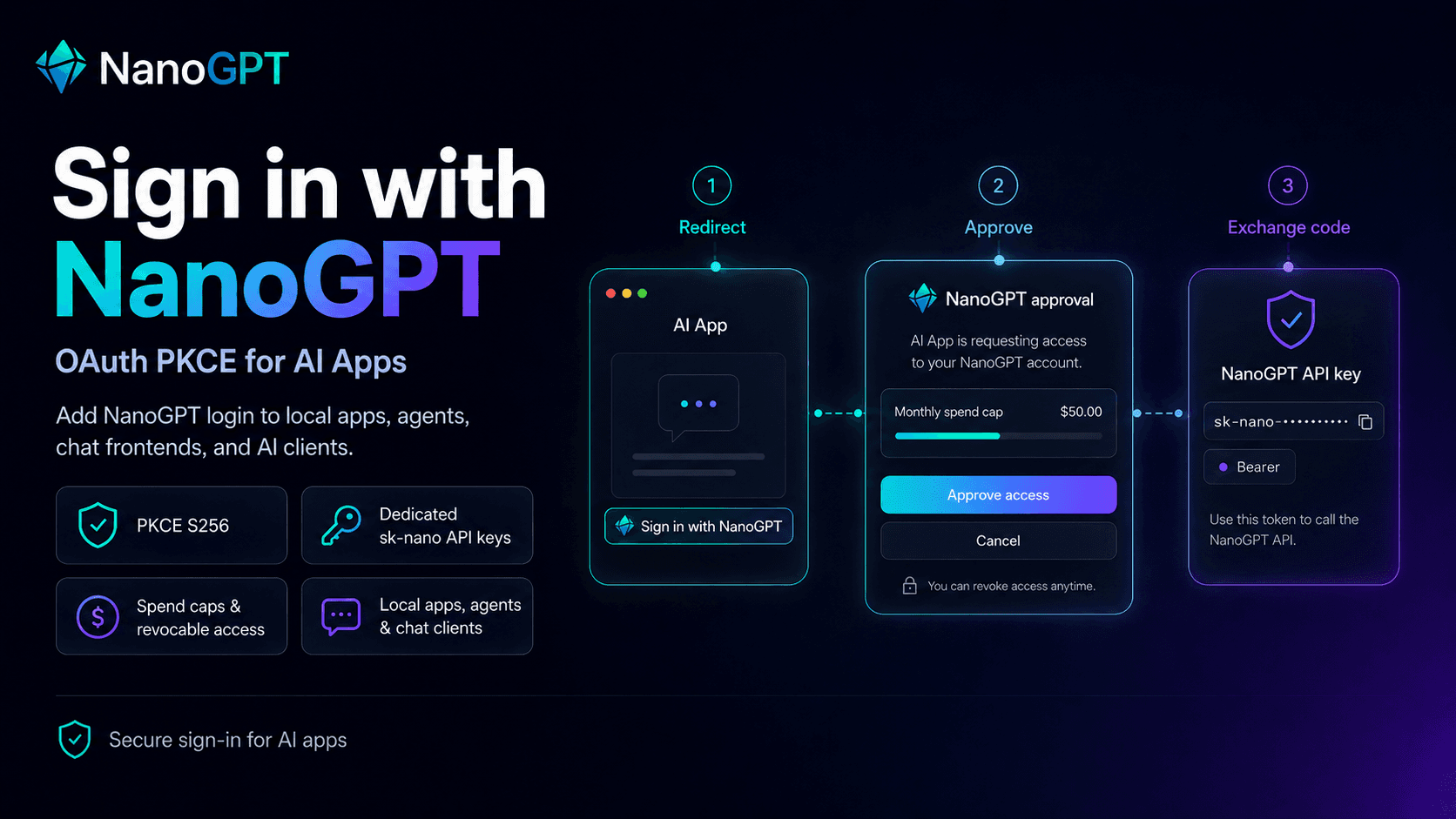
Sign in with Bitcoin.com AI: OAuth PKCE for AI Apps
Developers can now add Sign in with Bitcoin.com AI to local apps, agents, chat frontends, and OpenAI-compatible clients.

Updates, guides, and insights from the NanoGPT team
Showing
70 posts found for 'api'
Developers can now add Sign in with Bitcoin.com AI to local apps, agents, chat frontends, and OpenAI-compatible clients.
Bitcoin.com AI Private Mode encrypts supported TEE chat requests in your browser or local proxy before Bitcoin.com AI receives them, with receipts you can verify yourself.

A complete roundup of what Bitcoin.com AI shipped in May 2026, including Private Mode, PII redaction, Batch API, Data API, image templates, model comparisons, new media models, payment options, and reliability improvements.
Bitcoin.com AI Private Mode encrypts supported TEE model requests in the browser, shows verification receipts after responses, and gives users a way to independently check attestation evidence.

Treat mTLS as the front door: issue client certs, enforce CA trust and revocation, map cert identity to access, and test failure cases.

Dependency conflicts break AI projects—use pinning, Conda/Mamba, AI debuggers, and unified model APIs to prevent GPU and runtime failures.
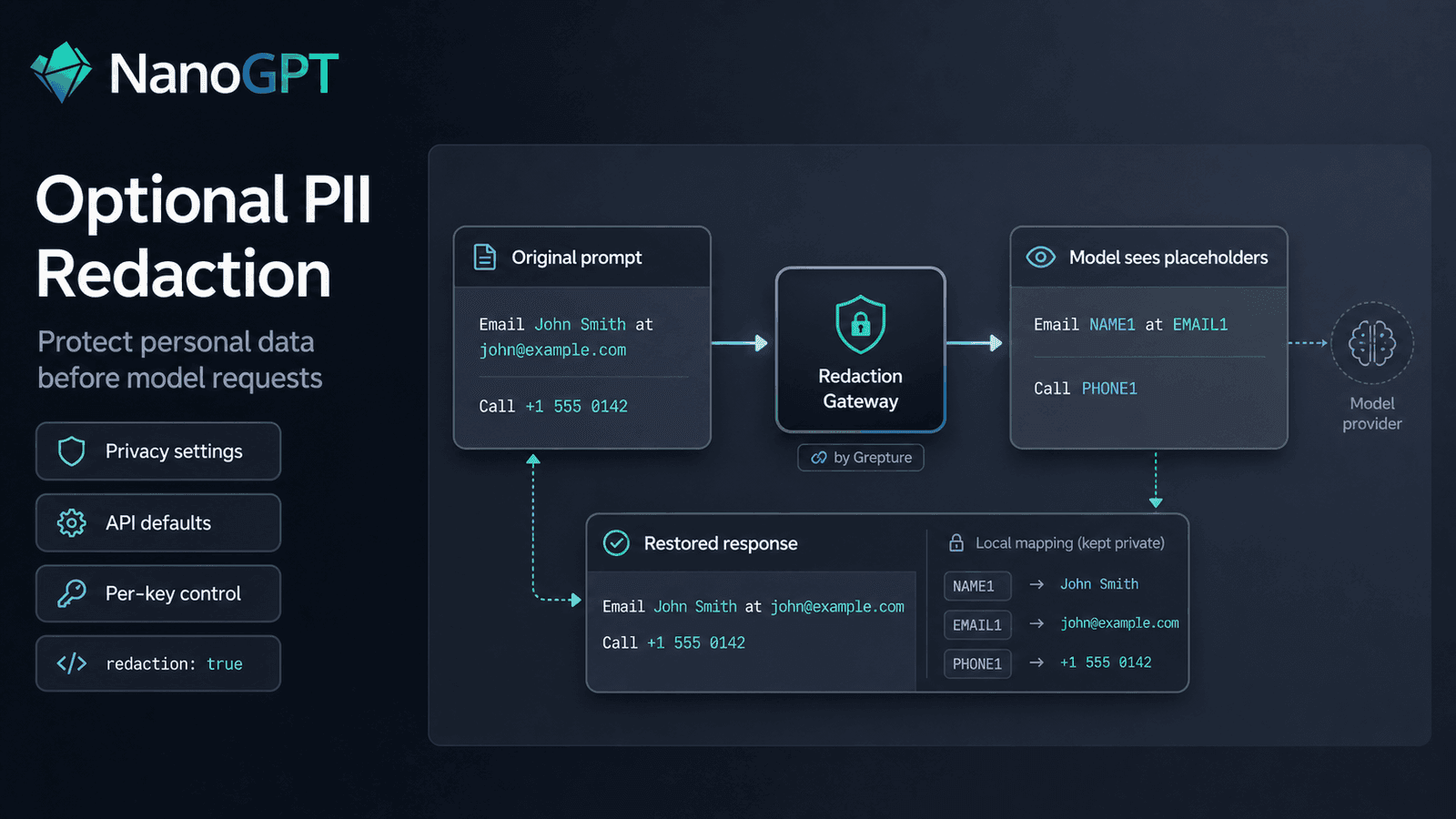
Bitcoin.com AI now supports opt-in PII redaction for chat, completions, and responses request content, using Grepture's mask-and-restore flow to protect personal data inside prompts before they reach model providers.
How to connect the Bitcoin.com AI MCP (Model Context Protocol) server to Claude Code, Cursor, and other MCP clients.

What Bitcoin.com AI TEE models actually protect, what they do not, and how to verify attestation and signatures without overstating the privacy guarantees.

A practical guide to combining Bitcoin.com AI models with web search, memory, MCP, scrapers, and application tools for useful AI automations.